

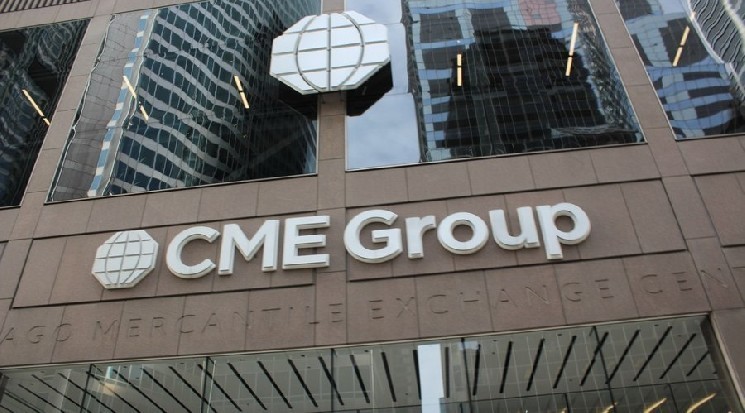
A massive, hours-long outage at the world's largest exchange operator CME Group on Friday left brokers “blindsided” and forced some companies into a high-stakes scramble to use their own internal data to quote prices to customers after official market benchmarks froze.
The outage was caused by a cooling system failure at CyrusOne's CHI1 data center in the Chicago area, which brought down CME's core electronic trading infrastructure, Globex. The disruption has already lasted longer than a similar hours-long CME outage in 2019, underscoring how deeply the exchange's systems are at the center of global derivatives markets.
CyrusOne said engineers had restarted several chillers at limited capacity and deployed temporary cooling equipment, but did not provide a timeline for full recovery.
(#Highlighted link#)
Global futures trading freezes as brokers take risks
Exchanges eventually restored some operations, but the prolonged outage across major global futures markets was a stress test for the financial system. The failure revealed hidden risks that brokers are forced to shoulder in the event of a failure of a core part of the market infrastructure.
BrokerTec's fixed income platform remained operational, but its core futures contracts across stocks, bonds and commodities remained offline, freezing prices for everything from WTI crude oil to 10-year Treasury bonds, Nikkei futures, palm oil and gold.
CME announced that BrokerTec EU, BrokerTec US Actives, and EBS are open and trading, with futures and options markets reopening at 7:30 a.m. Central Time.
BrokerTec EU, BrokerTec US Active, and EBS are openly traded. Futures and options markets open at 7:30 a.m. Central time.
— CME Group (@CMEGroup) November 28, 2025
There were clear signs of stress in some markets. Spreads on gold at one point widened by more than 20x and cash liquidity declined as participants moved to alternative venues with less transparency.
Trading suspension forces brokers to set internal prices
Christopher Forbes, CMC Head of Asia, said: Photo: CMC Market
“We're taking a lot of unnecessary risks here to keep pricing going,” Christopher Forbes, head of Asia and Middle East at CMC Markets, told Reuters, describing a situation not seen in 20 years.
With official prices for benchmarks such as West Texas Intermediate crude oil and S&P 500 futures frozen, CMC has had to turn to its own internal data and calculations, including pricing from other brokers in some cases.
Other brokerages such as Saxo Bank, XTB and eToro have also been forced to completely suspend trading in various US indexes, government bonds and commodity futures. The move extended the suspension to retail traders, but also protected companies from the immense risk of offering trades without a reliable live price feed.
Michael Brown, senior research strategist at Pepperstone.
Thin liquidity during holiday season prevents shock from spreading
The timing was particularly difficult for some, as S&P 500 options with a notional value of about $600 billion are set to expire on Friday, according to data compiled by Bloomberg. For desks that roll positions or manage delta exposure, the futures shortage has been a major operational headache. Some dealers used ETFs or Euro Stoxx futures to hedge, but neither is a perfect match for SPX options.
A saving grace for the market was the timing after Thanksgiving, a day known for low trading volume and few major economic data releases.
“If that has to happen, today is probably the best day,” Pepperstone senior researcher Michael Brown told Reuters.
Nevertheless, the event served as a serious reminder of market fragility. The several-hour power outage offered a rare real-world glimpse of what happens when benchmarks disappear. Rather than disappearing, the risk is eventually communicated to brokers, forcing them to choose between shutting down the market or navigating without a map.


