

A four-year dispute between rural Hood County residents and a nearby Bitcoin mining operation has exposed the social costs of Texas' cryptocurrency boom. Homeowners turned on one of the state's largest digital asset mining companies.
At the center of the dispute is a large Bitcoin mine operated by MARA Holdings near Granbury in unincorporated Hood County.
Bitcoin mining is constant mental torture
Neighbors say the constant low-frequency noise from the facility's cooling system has turned daily life into what they call a never-ending ordeal. MARA (formerly Marathon Digital) says it operates legally, brings investment and jobs, and takes steps to reduce noise.
The mine began operations in 2022 next to a natural gas power plant outside Granbury. Residents soon reported noise around the clock, likening it to “standing on a runway” or “the edge of Niagara Falls.” Complaints intensified into 2023 as the site expanded.
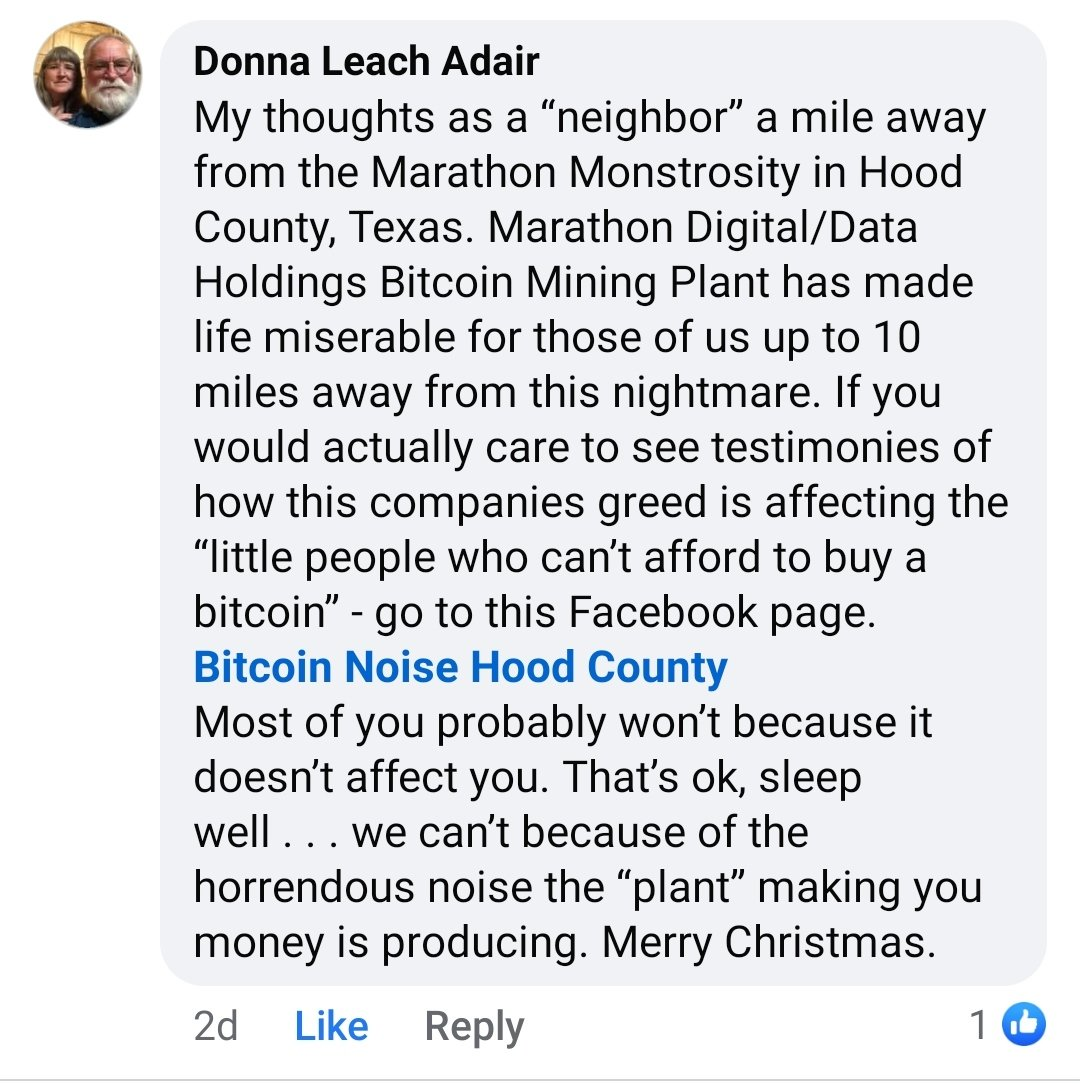
Residents’ comments on the Bitcoin mining situation in Hood County
“I hear this noise every day when I walk out the back door,” one resident said in a recent news story. Al Jazeera reported. Some complained of sleepless nights, headaches and stress. “The community is sick,” said another resident. “It's not just noise, it's physical bombardment. It's torture.”
Texas crypto boom reaches regional limit
Texas will become the largest Bitcoin mining hub in the United States, providing nearly 30% of the nation's mining power by 2023, thanks to cheap land, low taxes, and a deregulated power market.
This growth collides with important legal realities. Counties in Texas generally cannot pass mandatory noise ordinances. Only cities can do that.
Hood County officials sought to enforce the state's “unreasonable noise” ordinance in 2024, issuing citations tied to high decibel thresholds.
However, this effort stalled in court, demonstrating how narrow these laws are compared to typical municipal noise limits.
Litigation and sound research
Residents organized a private nuisance lawsuit in state court, claiming that the noise and vibrations from the mine were seriously interfering with the use of their homes.
The case is still ongoing, with ongoing disputes over access to operational data and measurements.
Separately, Hood County commissioned an independent acoustic survey in late 2024. The report documented an increase in noise levels near the site and highlighted that the legal standards used in the criminal code are far more permissive than noise standards in other cities.
The study also points out that there are limitations in access and adjustment that do not allow complete evaluation under all operating conditions.
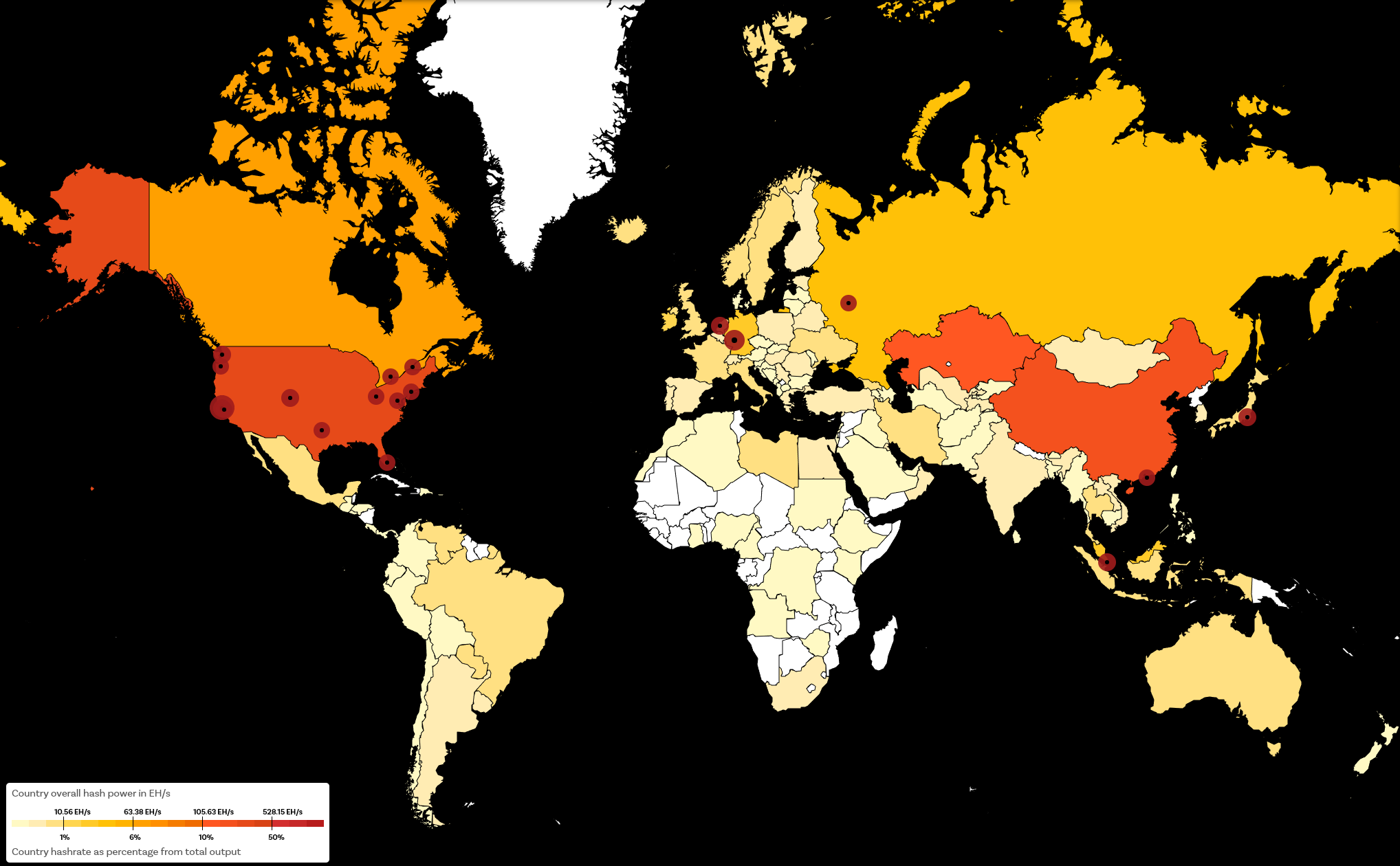
Bitcoin mining hashrate world map. Source: Chain News
MARA says it has made significant investments to reduce the impact. The company built large noise barriers, replaced some cooling fans with quieter models, and began transitioning parts of the site to immersion cooling.
In a statement cited by Al Jazeera, MARA said it has invested more than $320 million locally, supported dozens of jobs, generated tax revenue and “remains committed to being a good neighbor.”
For residents, these measures have not yet gone far enough.
“This was our forever home,” one homeowner said. “I can't sell my property. I'm now being taxed at a higher rate than the value of my property.”
Cityhood bid fails
In 2025, residents took a last resort. They want to incorporate their community as a city, which would allow them to enact local noise laws.
The effort garnered national attention and faced legal opposition from MARA, but a judge allowed the vote to proceed. Voters ultimately rejected the incorporation, ending the attempt to gain city authority.
“That was the plan,” the organizer told Al Jazeera. “But it just fell apart because they lost that battle.”
Incorporation is off the table, but residents say they will continue to fight in court.
The post MARA's Bitcoin mining has become a nightmare for this Texas town appeared first on BeInCrypto.


