
In 2025, ETF money flowed into the U.S. market at an unprecedented pace. With about a week left on the calendar, the numbers are already set. The $13 trillion ETF industry broke records across flows, product launches, and trading activity.
The amount of inflows alone reached $1.4 trillion, breaking last year's record high. The number of new funds launched exceeded 1,000. Trading volume also hit a new peak.
This rapid advance did not come about quietly. As U.S. stocks continued to rise, so did the world of ETFs. The S&P 500 posted double-digit gains for the third year in a row. The same thing happened even as the index leveled off from October.
Markets addressed questions surrounding AI's massive spending plans and unanswered questions about when the Federal Reserve will cut interest rates. Still, demand remained strong, and ETF trading volumes continued to rise through the end of the year.
Stock price appreciation and product launches drive historic growth
U.S. exchange-traded funds have attracted money at a speed that surprised even longtime watchers. ETF inflows broke last year's record before December ended. More than 1,000 products are introduced to the market each year.
That has never happened before. According to Bloomberg data, 2021 was the last year that flows, launches, and volume all peaked together.
The S&P 500 helped drive the rally. The index rose for the third year in a row, despite slowing in recent months. Since October, the standard value has remained within a narrow range.
Investors remained cautious amid mounting questions over the future direction of big tech companies' AI investments and interest rates. Nevertheless, money continued to flow into new and existing funds.
History still hangs over the market. After a strong 2021, risk assets fell sharply the following year. The S&P 500 fell 19% in 2022.
Treasuries offered no protection to investors as the Federal Reserve rapidly raised interest rates. Trading volumes remained high during this period, but flows and launches cooled as volatility affected portfolios.
Some expect this pattern to repeat. “I think there's going to be a reality test next year,” said Eric Balciunas, senior analyst at Bloomberg Intelligence. “This seems like a perfect year for ETFs, so you want to be ready for that.”
Cryptocurrency funds expect outflows as markets focus on year-end rally
Cracks were already confirmed in virtual currency-related products in late December. On December 23, ET, the Bitcoin Spot ETF recorded net outflows of $189 million. This is the fourth consecutive day of redemption.
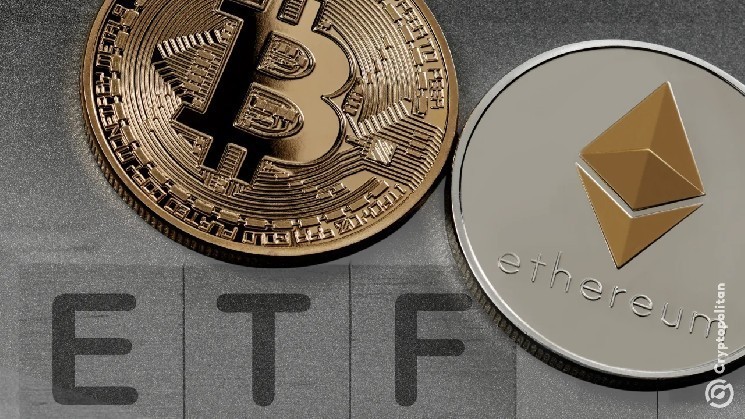
BlackRock's IBIT led the move, recording $157 million in outflows in one day. The Ethereum Spot ETF also fell, with $95.52 million leaving the group. All nine products reported zero inflows that day.
Even with these outflows, investors continued to focus on the final trading day of the year. Many focused on the Santa Claus Rally, which lasted from the last five trading sessions of December to the first two trading sessions of January. The period is from December 24th to January 5th of this year.
According to LPL's financial data, the S&P 500 index rose an average of 1.3% during this period. A positive outcome occurs 78% of the time. Outside of that period, the index's seven-day average return is 0.3%, with an upside of 58%.
The market ended strong on Tuesday. The S&P 500 closed about 0.5% lower at 6,909.79, setting a new closing price record. After that, futures traded almost flat.
Dow futures fell 25 points (0.05%). S&P 500 futures fell 0.05%, while Nasdaq 100 futures were little changed. Tech stocks led the way, with Alphabet, Nvidia, Broadcom and Amazon lifting the index for the fourth day in a row.


