

Bitcoin surged late on Tuesday in the BTC/USD1 trading pair, briefly hitting $24,111 on Binance, before climbing above $87,000 within seconds, according to exchange data.
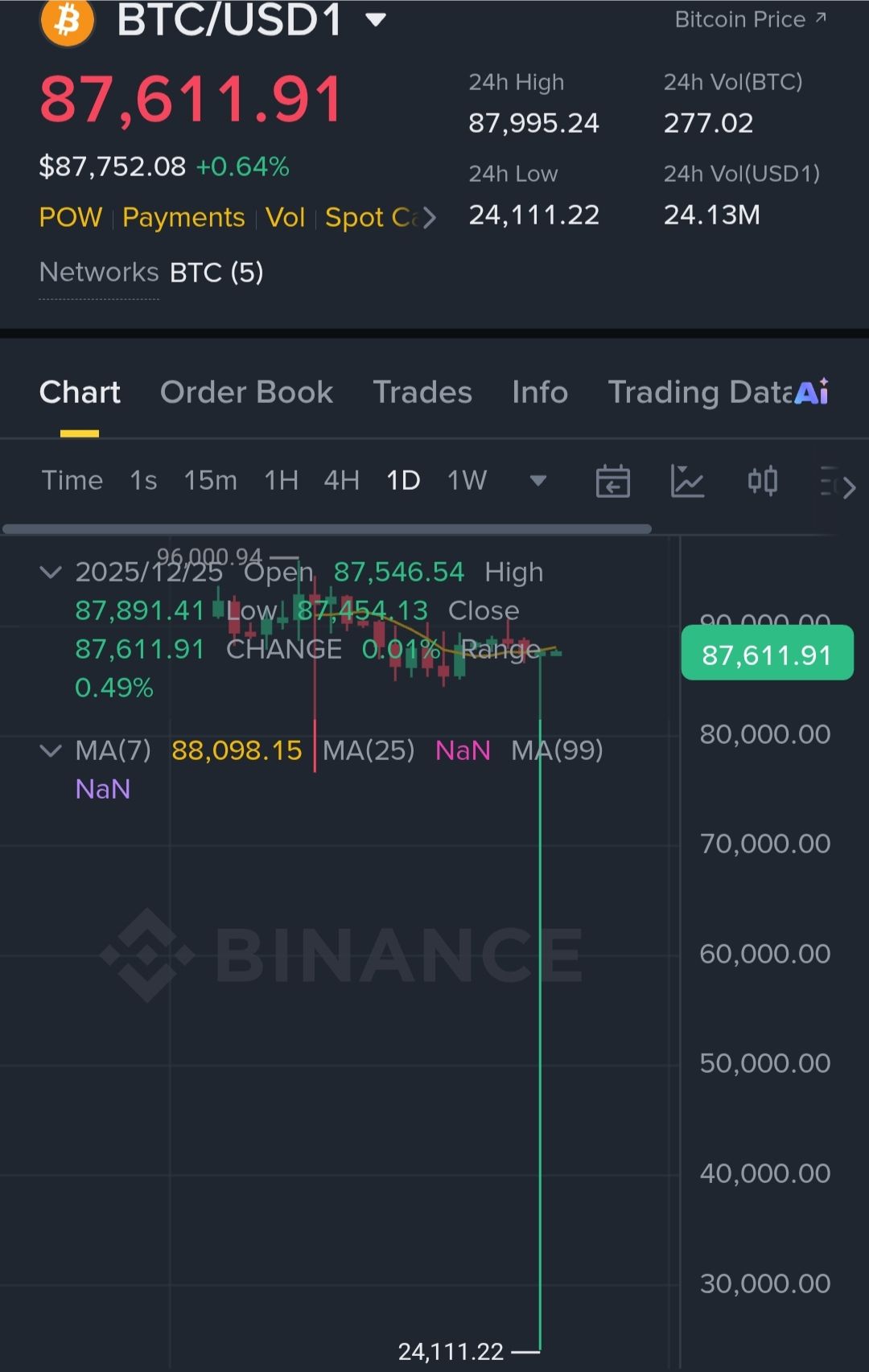
The move was not seen in other major BTC pairs and appeared isolated to USD1, a stablecoin launched by Trump family-backed World Liberty Financial. After that, Bitcoin normalized, trading around the prevailing market price.
These sudden “wicks” are usually caused by thin liquidity or potential display problems, rather than widespread collapses. New stablecoin pairs or stablecoin pairs with low trading volume often have fewer market makers offering tight prices, and the order book may be shallow.
One large sell, liquidation, or automated trade through a pair in the market can cause a rapid flood of bids and print prices well below the actual market level until a buy order appears again.
Such disruptions can also be caused by temporary pricing issues related to widening spreads, incorrect quotes from market makers, or trading bots reacting to abnormal printing.
During quiet periods, the effect may be amplified as fewer participants seek to absorb order flow and restore price parity.
Although the wick may look dramatic on the chart, traders typically treat these marks as microstructural events rather than as signals of Bitcoin's fundamental direction.
Still, it highlights the risks of using thin pair for execution, especially at a stage when stablecoins and trading routes are building liquidity.


