
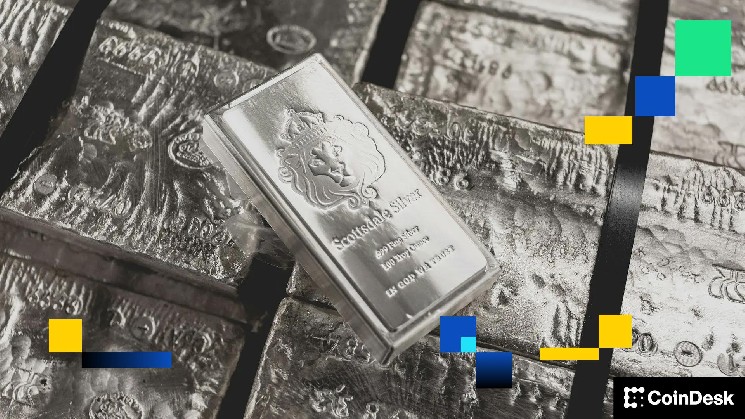
Interest in silver has spilled over into the tokenization market, with on-chain trading volumes increasing alongside futures and exchange-traded fund (ETF) activity. This is due to increased volatility in the metal after a series of monthly highs.
According to data from RWA.xyz, the monthly remittance volume of the tokenized version of iShares Silver Trust (SLV) has surged more than 1,200% in the past 30 days, with the number of holders increasing by about 300% and the net asset value increasing by about 40%.
Tokenization involves representing real-world assets such as private equity, real estate, and commodities as digital tokens on a blockchain. This process makes it easier to trade and split assets, opening up new possibilities for fractional ownership and liquidity.
For example, a tokenized silver trust allows non-US investors to gain exposure to SLV, allowing them to mint, redeem, and transfer tokens around the clock.
Cash market pricing has diverged widely from futures pricing, with analysts pointing out that London's forward curve is in backwardation as Asia's premiums reach double-digit levels over the COMEX. That means metal prices near $80 an ounce are higher now than they will be in the future, a sign of near-term supply stress.
Silver's rally has been driven by a combination of supply constraints, structural demand, and macro tailwinds that have tightened the physical market.
Analysts say China's decision to impose export permits on refined silver from January 1 will further heighten concerns over availability (and higher prices), while higher futures margins and year-end positioning will complicate trading on traditional exchanges.
https://t.co/rKwF6Gn56n
— Campbell (@abcampbell) December 28, 2025
At the same time, demand from the solar power industry continues to increase, and even after prices have more than tripled from 2024 levels, silver consumption related to solar power manufacturing remains largely inelastic.
Silver’s on-chain rise in tandem with TradFi support appears to be another data point indicating that tokenized versions of assets are a trend that will continue.


