

Bitcoin BTC$92,565.70 Traders may want to move beyond the dollar index and add Japanese yen (JPY) to their list of relevant markets, as the relationship between cryptocurrencies and the yen has reached an all-time high in the past 90 days.
According to data source TradingView, the 90-day correlation coefficient between BTC and Pepperstone's JPY index rose to 0.86, an all-time high.
This high correlation means that the two assets are moving very closely in the same direction, with 73% of BTC's price movements over the past 90 days reflecting movements in the yen. The 73% figure, known as the coefficient of determination, is derived from the square of the correlation coefficient and provides an intuitive percentage of the “goodness of fit” of the model.
Pepperstone's JPY Index, known as JPYX, is a Currency Index Contract for Difference (CFD) that measures the strength of the Japanese Yen against a basket of four major currencies: the Euro, US Dollar, Australian Dollar, and New Zealand Dollar.
Bitcoin's close correlation with the yen means that, as it has for the past 90 days, the once-independent bitcoin is now under the shadow of Japan's currency fluctuations, which have plummeted and soared along with the yen. In other words, at this point BTC seems to have lost its appeal as a portfolio diversifier, turning what was once a unique “digital gold” hedge into a double bet on the yen.
That said, traders should be aware that the correlation between cryptocurrencies and traditional assets such as stocks and currencies is often temporary.
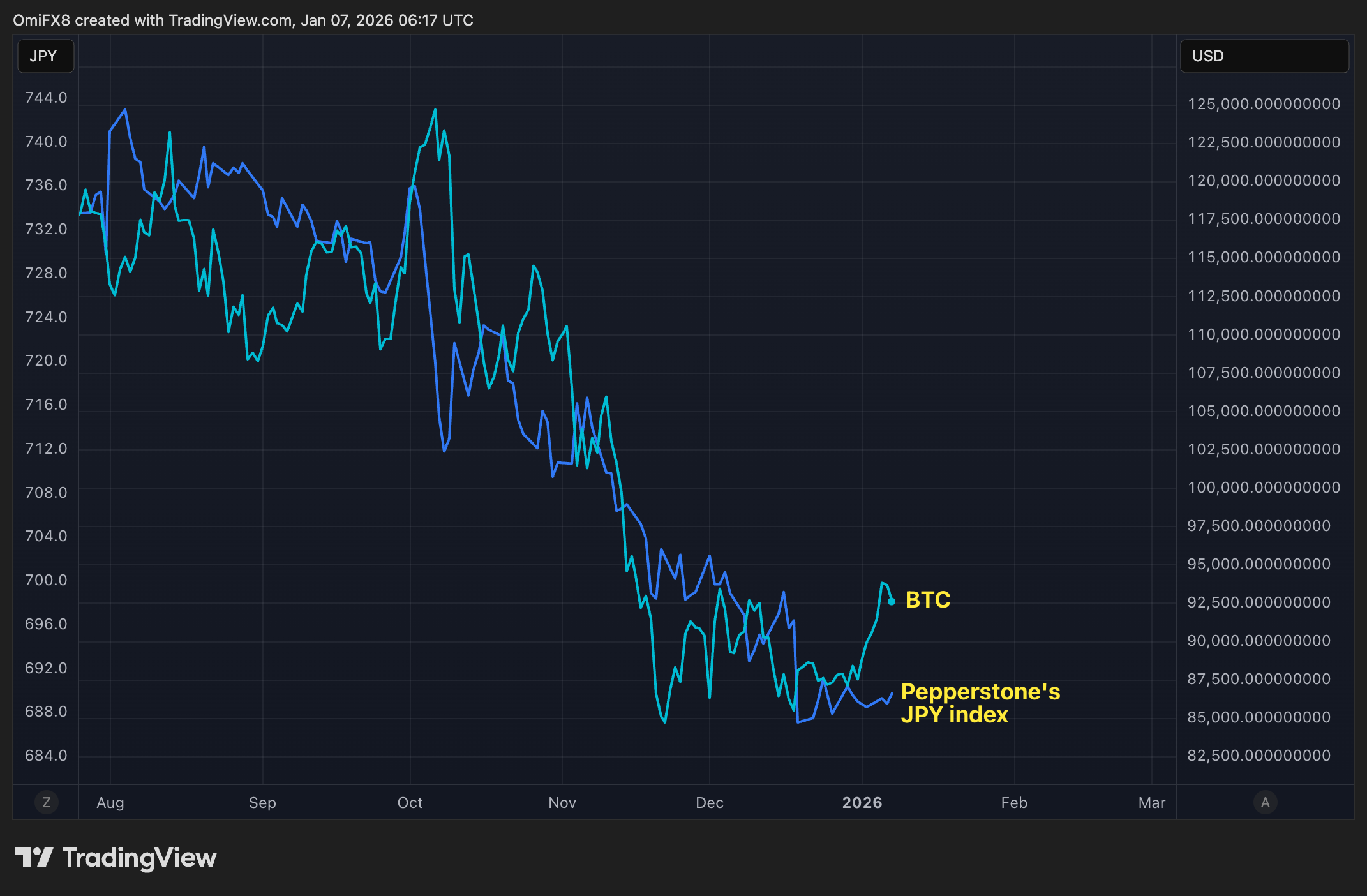
BTC and JPY have been at almost the same rate since October 2025. (TradingView)
BTC peaked in early October and fell over the next two months, but the Yen index extended its downward trend as a result, and selling in both currencies stalled from mid-December onwards.
Furthermore, Japanese government bond yields have risen due to concerns about the sustainability of fiscal debt, and the yen has been on a downward trend since April last year. With a debt-to-GDP ratio of 240%, Japan is one of the most indebted countries in the world, but much of that debt is held by domestic investors.
Japan's rising debt has left the central bank caught in the middle. Raising interest rates would sharply increase debt service costs and worsen fiscal turmoil, while keeping interest rates at low levels risks a full-scale depreciation of the yen.
Some observers argue that a fiscal crisis is already unfolding in foreign exchange markets due to the sharply weakening yen, and that only a potential US recession will give Japan some breathing room.


