
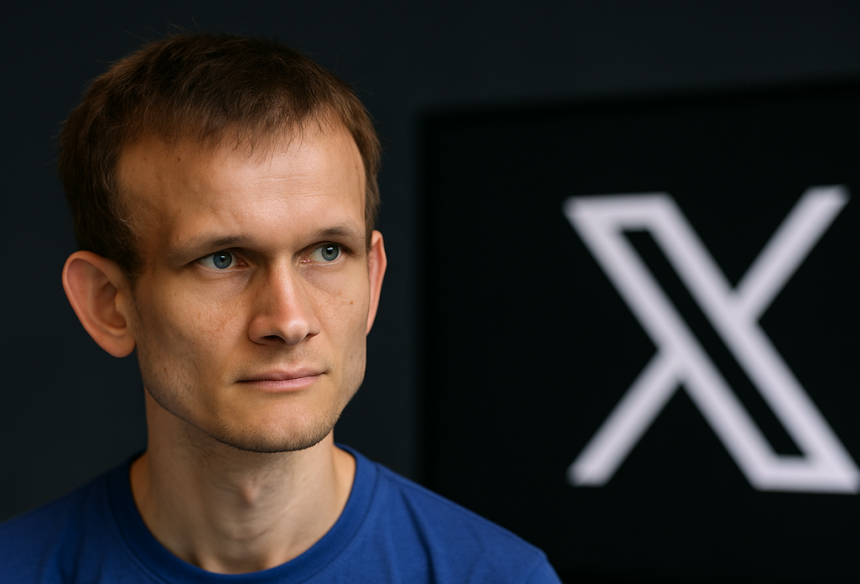

Ethereum co-founder Vitalik Buterin has warned against X's new “indicate which country an account is from” transparent tags, arguing that the feature will quickly be undermined by spoofing and expose some users to unacceptable privacy risks. X recently expanded its “About this account” screen to allow users to view metadata such as the account’s country or region along with creation details, and moved the platform’s position as a tool against manipulation and fraudulent activity.
Ethereum founder sounds alarm bells.
Buterin's first post acknowledged the potential for a near-term upside but framed the system as vulnerable to hostile pressures. “It will have many positive effects in the short term,” he wrote. He then predicted that sophisticated operators would adapt faster than the platforms could strengthen their signals. “Sophisticated actors will find ways to pretend they are from a country they are not.” It points out rentable passports, phone numbers, and IP infrastructure that can be used to manufacture plausible sources.
His core asymmetry argument was straightforward. “It would be moderately difficult to get a million accounts with fake locations. It would be easy to get a single account with a fake location and then take it to a million followers.” In his view, this feature will be brought into play by labeling foreign influence accounts with an Anglophone tag to increase their credibility. “Within six months there will actually be (random Eurasian country) based political troll accounts with names like ‘Defense Western Civilization’ or ‘USA’ or ‘UK’ as location tags.”
The Ethereum founder emphasized that he was explaining incentives, not endorsing them. “This is not what I hope for, but what I think will happen.” What he wants instead is a provenance system that “gives more visibility in a way that's not easy to spoof about what people in different communities think about different issues” and defines communities through broader, new evidence rather than “limited, easy-to-read credentials like countries.”
He concluded, “Making these systems adversarially powerful will not be easy.” This criticism is consistent with the cryptocurrency security view that identity signals are weakened when attackers can purchase or synthesize them at scale.
Soon after, the Ethereum founder sharpened his opposition to consent and security. “I’ve thought about this some more, and I think the respondents are right that it’s wrong to disclose your country without consent without providing an opt-out option (including ‘disable your account’),” he wrote.
He cautioned that state-level disclosures are largely de-identifying, but that extreme cases are important. “There are people for whom even a few data breaches could be at risk, and their personal information should not be taken retroactively.” Privacy advocates at
X has already faced questions about its accuracy and implementation, with reports that some country tags were found to be incorrect and the platform had adjusted their visibility while promising a fix. This instability further reinforces the warnings of Ethereum’s founder. If tags are inferred from IP, app store or telecom data, they are vulnerable not only to deliberate spoofing, but also to routine distortions such as VPN use, SIM swapping or account reselling.
At press time, Ethereum was trading at $2,800.
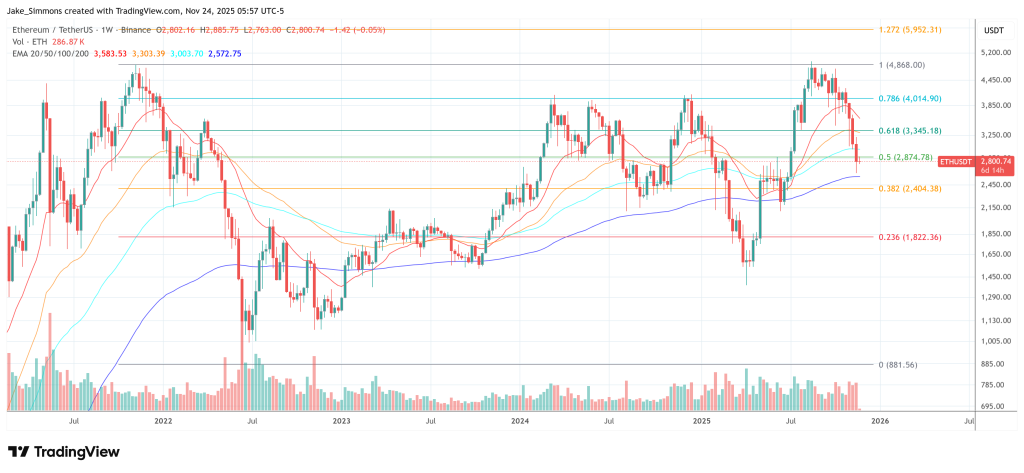
Featured image created with DALL.E, chart from TradingView.com
editing process for focuses on providing thoroughly researched, accurate, and unbiased content. We adhere to strict sourcing standards and each page undergoes diligent review by our team of top technology experts and seasoned editors. This process ensures the integrity, relevance, and value of the content for readers.


