
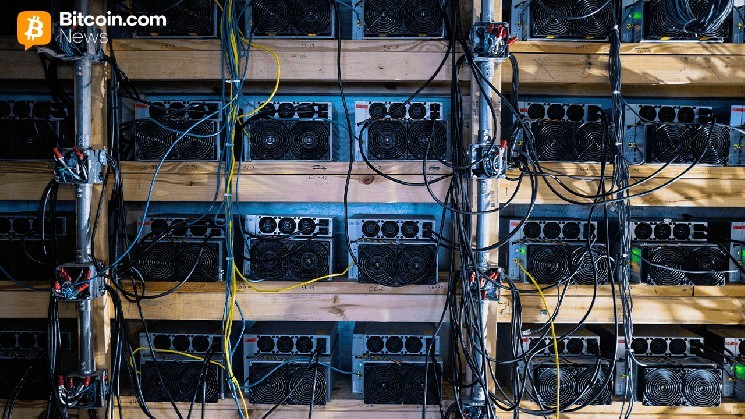
The evolution of Bitcoin mining machines in 2025 came down to the constant pursuit of leaner energy usage combined with significant increases in computing power, all centered around the application-specific integrated circuit (ASIC) market. Below is an overview of the top five Bitcoin mining machines as this year ends and the industry hurtles into 2026.
Why 2025 is the year to level up your Bitcoin mining hardware
2025 brought a clear leap forward in hardware, with next-generation rigs pushing hashrates comfortably over 1,000 terahashes per second (TH/s), or exactly 1 petahash per second (PH/s). These heavyweight machines have facilitated a surge in overall hashing power, making life significantly easier for miners throughout the year thanks to steadily increasing joules per terahash (J/TH) efficiency.
Beyond brute force, breakthroughs in cooling took center stage as advanced liquid and immersion systems gained wider attention, especially in large scale professional operations. With that in mind, let's dig into the top 5 Bitcoin mining machines of 2025, ranked by hashrate output and efficiency.
MicroBT Whatsminer M79S (1.35 PH/s)
Built by MicroBT, the Whatsminer M79S is a water-cooled SHA-256 ASIC miner that delivers a massive hashing power of 1350 TH/s or 1.35 PH/s. It was just announced in December, and the M79S represents MicroBT's petahash-scale miner for industrial farms.
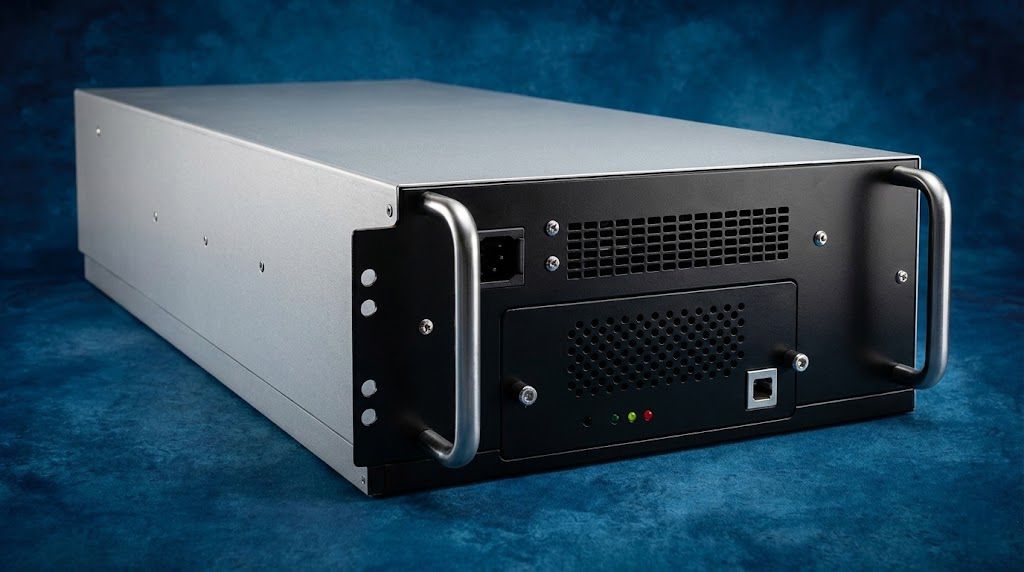
The next generation Whatsminer supports a stable output of 14.8 J/TH. Bitmain's Antminer S23 Hydro 3U (1.16 PH/s) performs on par with the new M79S, offering 1,160 TH/s of direct hashing power.
Bitmain Antminer S21e XP Hydro 3U (860 TH/s)
The Antminer S21e XP Hydro 3U sits comfortably in the S21 lineup as Bitmain's high-performance water-cooled standout. It delivers 860 TH/s while consuming approximately 11,180 W, settling around 13 J/TH when operating in hydro mode.

Bitmain Antminer S21e XP Hydro 3U.
This machine uses direct liquid-to-chip cooling (DLC) and fits neatly into a compact 3U rack form factor. This isn't a brand new face either. The S21e XP Hydro 3U has been around for a while and was first announced in September 2024.
Block Protorig (819 TH/s)
Proto Rig is a new air-cooled Bitcoin miner developed by Block Inc's hardware division. It delivers 819 TH/s while consuming approximately 12,000 W, which corresponds to approximately 14.1 J/TH in standard air-cooled operation.
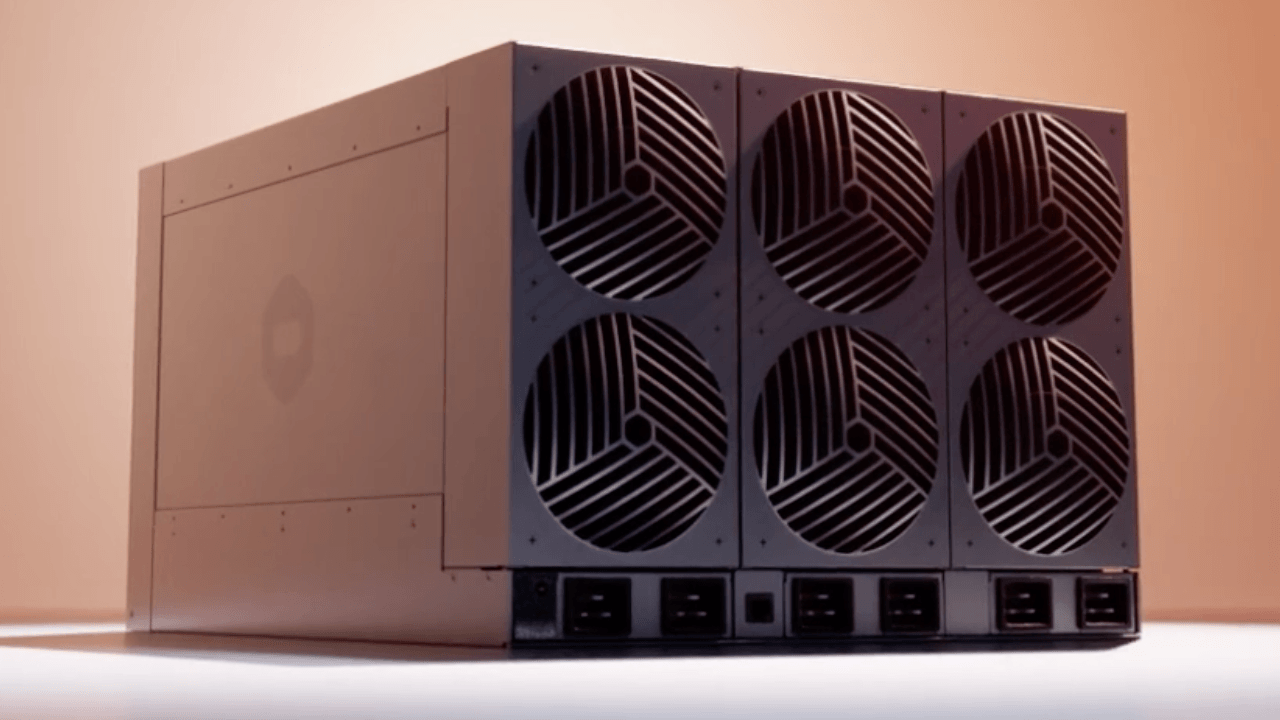
Block protorig.
This setup is unapologetically modular, packing nine hot-swappable hashboards (each clocking in at around 91 TH) into a single unit. The machine, which will be rolled out in mid-2025, is powered by Block's 3-nanometer ASIC, designed in the United States for efficiency and long-term durability.
Bitdeer Sealminer A3 Pro Hydro (660 TH/s)
Sealminer A3 Pro Hydro is Bitdeer's flagship water-cooled ASIC, introduced in September 2025 as part of the A3 series. It pushes out 660 TH/s while consuming approximately 8,250 W, which translates to an impressive efficiency of approximately 12.5 J/TH.
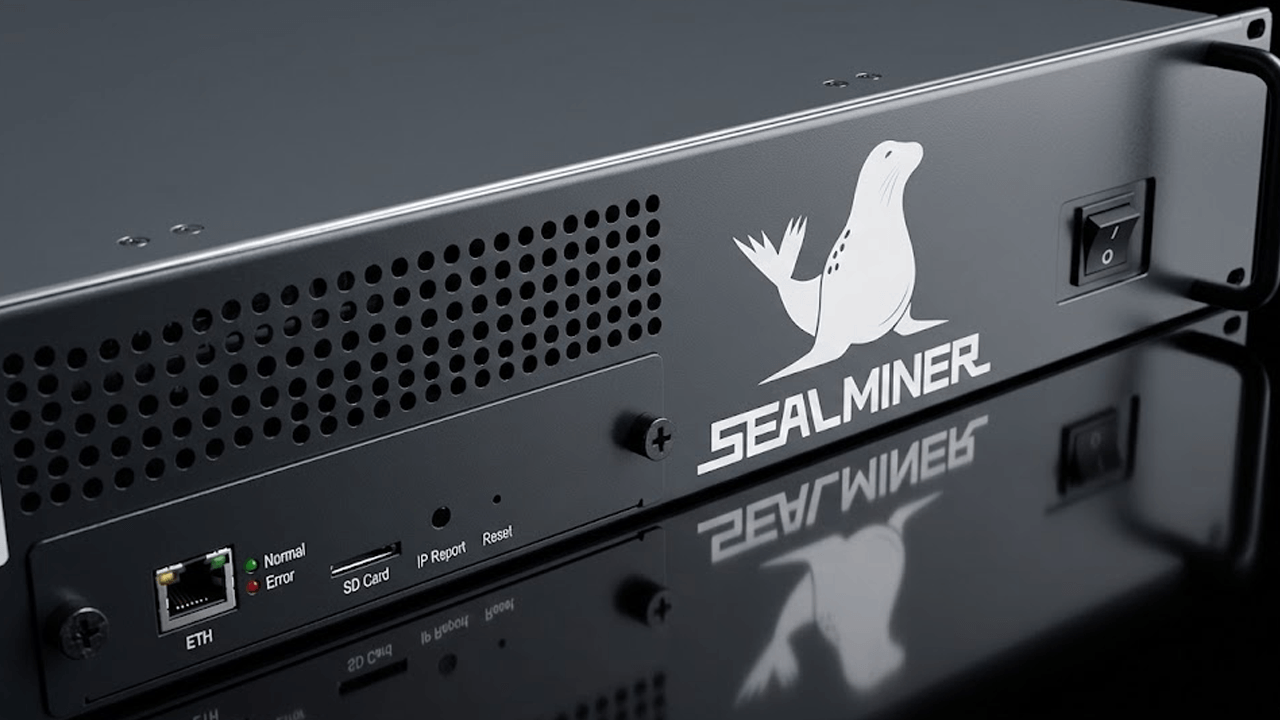
Bitdeer Sealminer A3 Pro Hydro.
Cooling is handled through a closed-loop water system intended to maintain smooth operation even under pressure. At the core of the A3 Pro Hydro is Bitdeer's latest A3 chip.
Bitmain Antminer S23 Hydro (580 TH/s)
Antminer S23 Hydro is Bitmain's next-generation flagship water cooling system launched at WDMS 2025 for next-level efficiency. It achieves around 580 TH/s while consuming around 5,510 W, clocking in at an impressive 9.5 J/TH, making it one of the most efficient Bitcoin miners available.
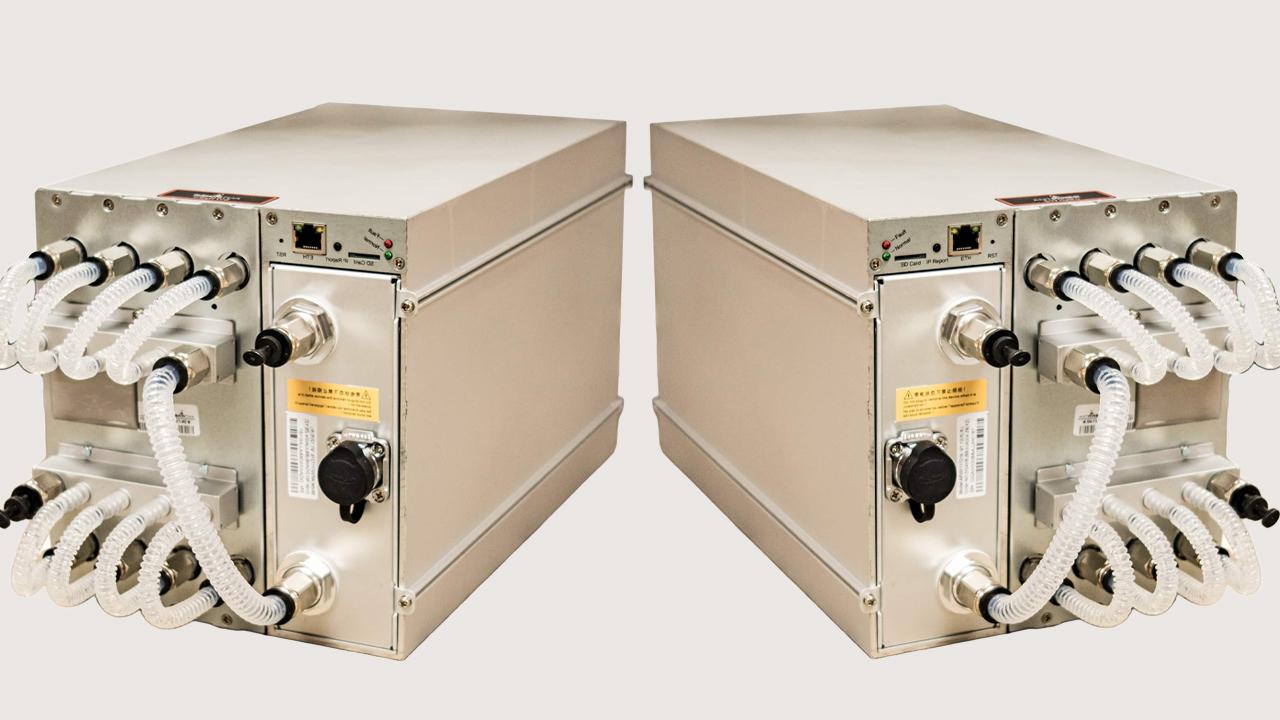
Antminer S23 Hydro from Bitmain.
The S23 Hydro uses a proven hydro-cooling approach, where coolant passes through plates attached directly to the chip, quickly evaporating heat. Built directly for industrial environments, this miner requires a 380-415V input and a full-fledged cooling infrastructure to match its goals.
Mining machine below 0.5 PH/s line
Under the 500 TH/s class of bruisers, a busy bunch of lower-tier Bitcoin miners rounded out the hardware roster in 2025, offering considerable hashing power without exceeding the 0.5 PH/s threshold. Machines such as Bitmain's Antminer S21
MicroBT's Whatsminer M73S and M73S+ have nudged the ceiling by brushing up towards 540 TH/s while claiming over 7 kW. Bitdeer's Sealminer A2 Pro Hydro and A3 Hydro fit comfortably in between, combining 500 TH/s class output with heavier wattage, making them ideal for sites that already have hydro cooling in place.
Auradine's Teraflux AH3880, on the other hand, turned heads this year with its powerful 600 TH/s punch coupled with a desire for significantly more power. This is a clear reminder that in this secondary layer, using more muscles means more electricity costs.
Bitcoin mining arms race shows no signs of slowing down
Taken together, these Bitcoin mining rigs tell a clear story. Mining in 2025 is less about squeezing out a small profit and more about engineering advantage. Hashrate milestones, once considered ridiculous, are now shipping rack-ready, while efficiency metrics have become the real battleground that separates hobby hardware from serious industrial hardware.
As the industry heads into 2026, the arms race shows no signs of letting up, even if miners themselves are cooler than ever. With the latest generation of rigs featuring hydraulic systems, modular designs, and increasingly demanding joules per terahash ratios, one thing is clear: modern Bitcoin mining is no longer just about power, it's about precision.
Frequently asked questions ❓
- What has changed in Bitcoin mining hardware in 2025?
Bitcoin mining hardware will cross the 1 PH/s threshold in 2025, significantly increasing energy efficiency due to lower joules per terahash. - Which Bitcoin miner achieved the highest hashrate in 2025?
MicroBT Whatsminer M79S led 2025 miners with SHA-256 hashing power of 1.35 PH/s. - Why will water-cooled Bitcoin miners become mainstream in 2025?
Hydraulic cooling allows miners to run higher hashrates at lower temperatures, increasing the efficiency of large-scale operations. - What will define the next generation of Bitcoin mining rigs for 2026?
The next wave of Bitcoin miners will focus on petahash-scale production volumes, tighter J/TH ratios, and industrial-grade cooling systems.


